How to Choose the Right TMR Feed Mixer: Horizontal vs Vertical
If you are planning to buy a TMR feed mixer, the first question is usually: should I choose a horizontal TMR feed mixer or a vertical TMR feed mixer?
Both machines produce Total Mixed Ration by chopping and blending silage, hay, straw, concentrate, minerals, and additives. However, they work in different ways and suit different farm layouts, feed recipes, and herd sizes.
This guide compares the two designs in practical terms so you can choose the right cattle feed mixer for your dairy farm, beef feedlot, or sheep operation.
Quick Comparison: Horizontal vs Vertical TMR Feed Mixer
| Factor | Horizontal TMR Feed Mixer | Vertical TMR Feed Mixer |
|---|---|---|
| Mixing action | Augers rotate along a horizontal trough | One or more vertical augers pull feed downward |
| Best fiber type | Short to medium fiber, ground feed, silage | Long fiber, hay bales, straw |
| Loading method | Front loader or conveyor from the side or top | Front loader from the wide top opening |
| Typical capacity | 2–12 m³ (compact to mid-size) | 3–36 m³ (small to very large) |
| Mixing time per batch | 10–25 minutes | 15–20 minutes |
| Mobile options | Tractor PTO or dual-power | Stationary or tractor-towed |
| Footprint | Longer, lower profile | Taller, more compact base |
| Purchase cost | Often lower for small sizes | Higher for large capacities |
| Best for | Small to medium farms, fixed feed rooms | Large herds, long forage, high throughput |
How Do Horizontal and Vertical TMR Feed Mixers Work?
Horizontal TMR Feed Mixer
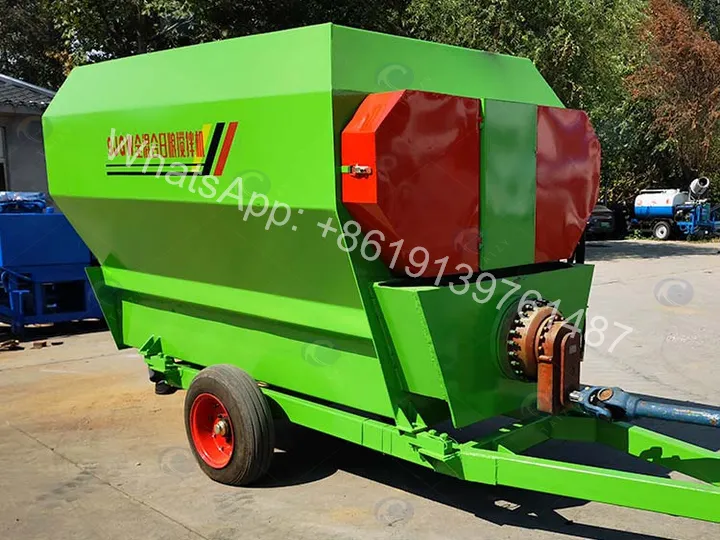
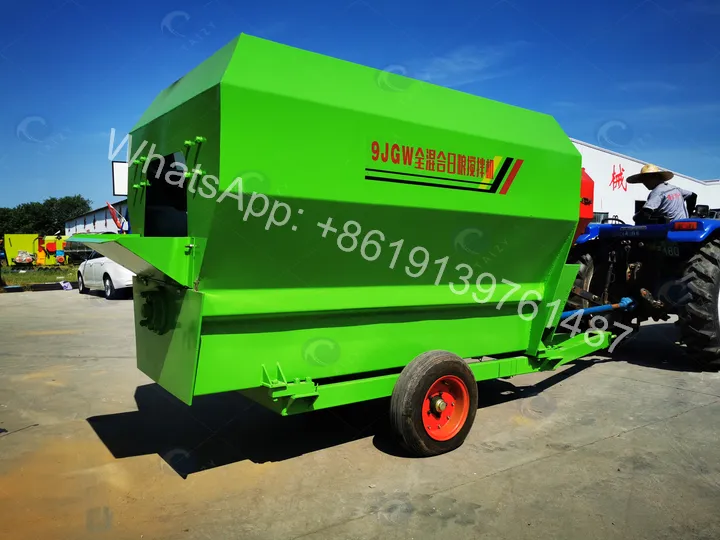
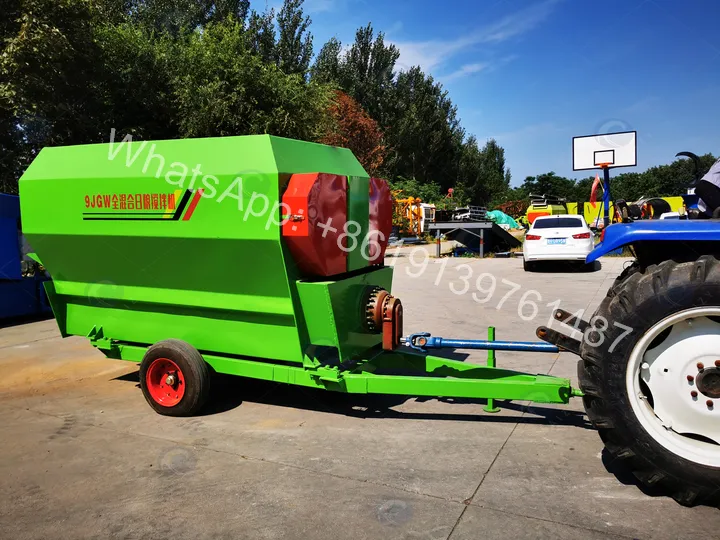
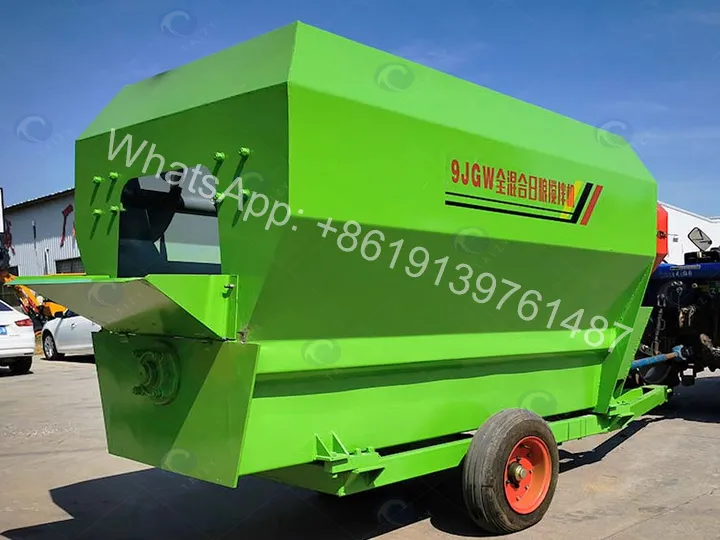
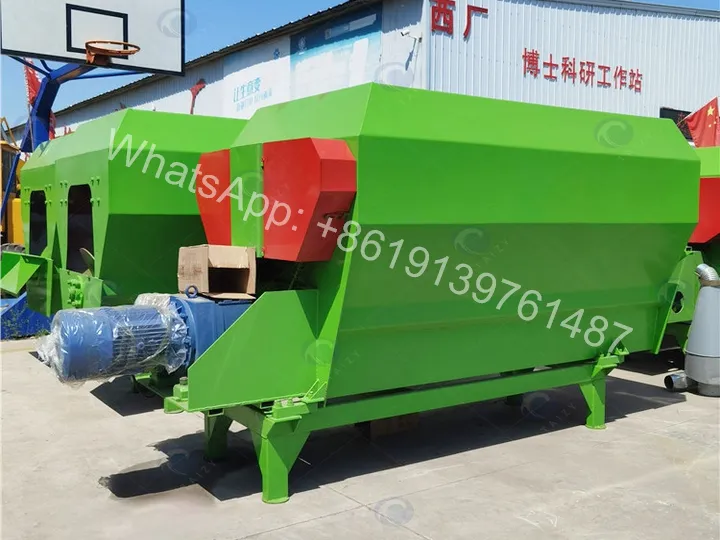
A horizontal TMR feed mixer uses one or two augers mounted inside a long, low trough. As the augers rotate, feed moves along the trough and is cut by blades against fixed knives.
The horizontal design is efficient for mixing silage, ground grain, and short forage. Twin-auger models add shearing and kneading action, which helps process longer straw and improve uniformity.
Because the trough is low to the ground, loading with a front loader is straightforward. The machine is also easier to fit under a feed room roof or in a low shed.
Vertical TMR Feed Mixer
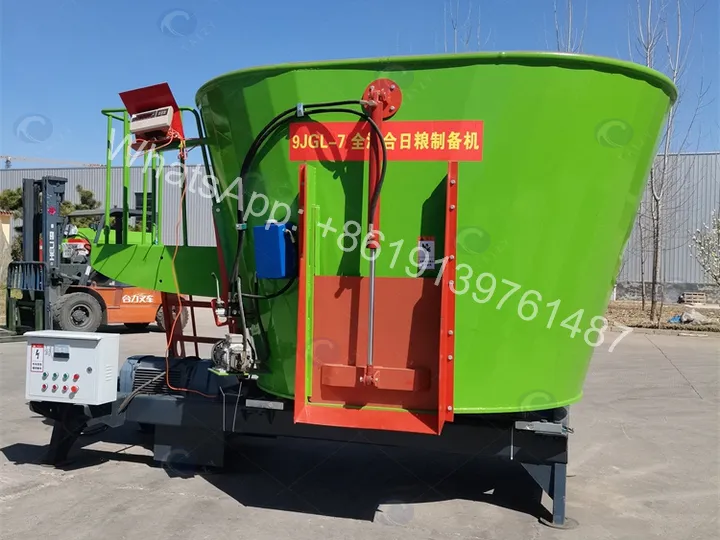
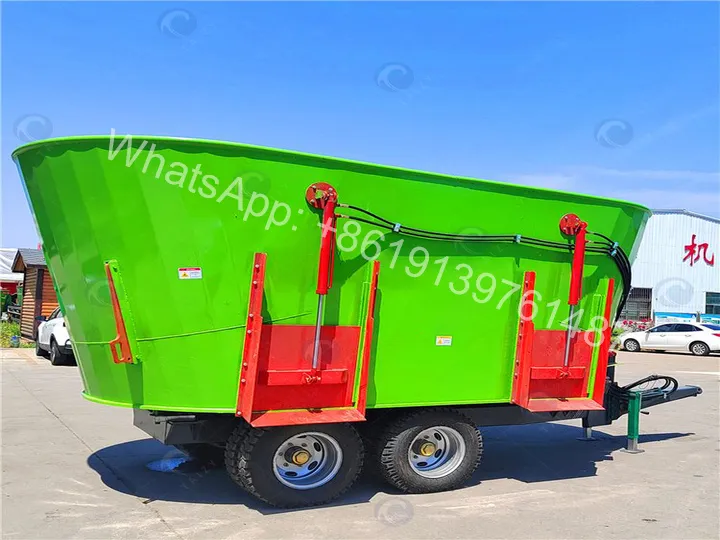
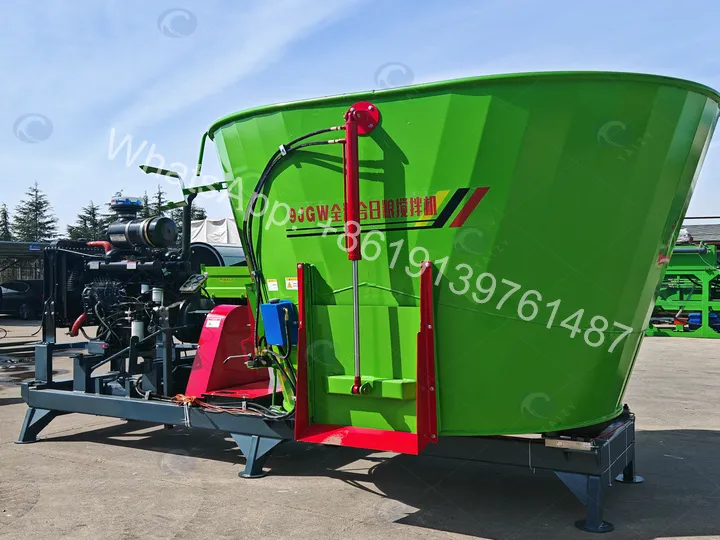
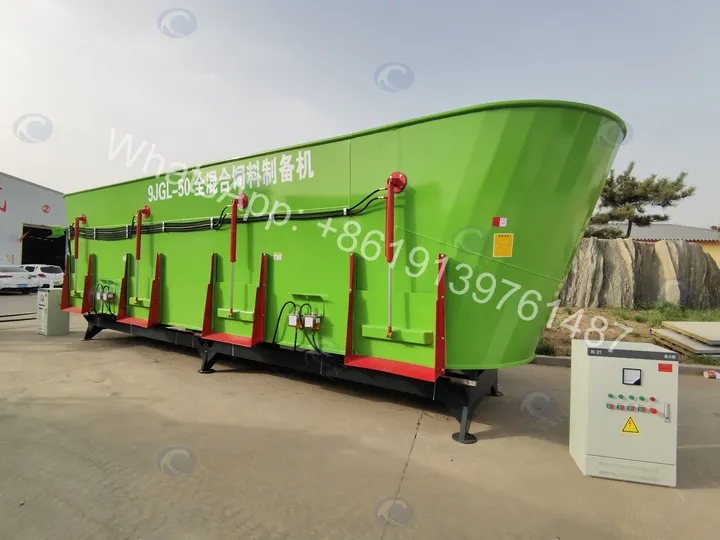
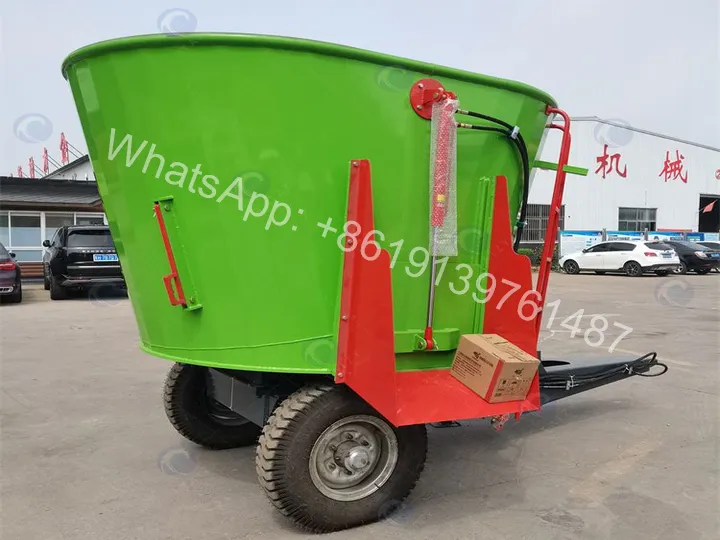
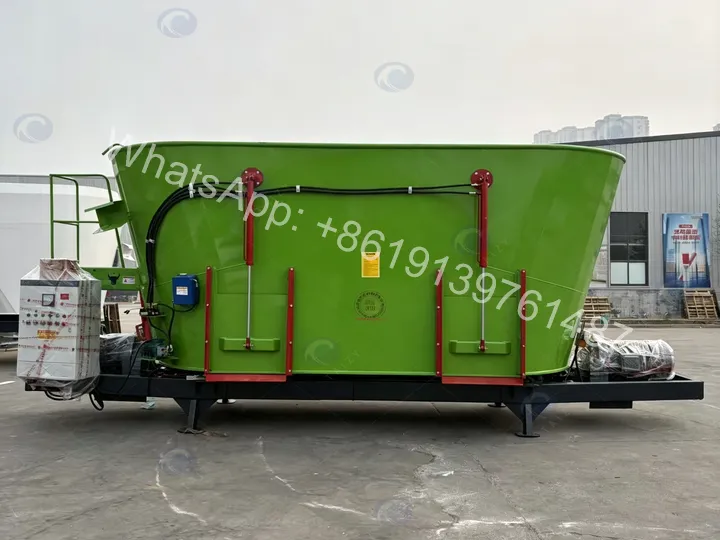
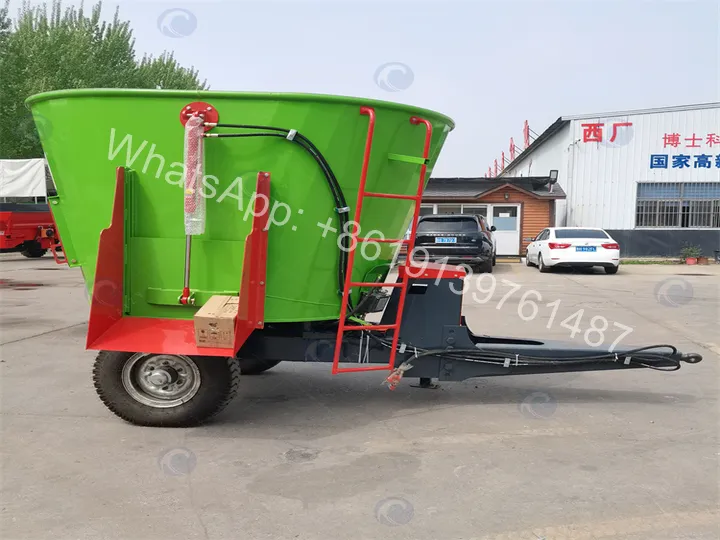
A vertical TMR feed mixer uses one or more upright augers inside a tall tub. Feed is pulled downward, cut by blades, and lifted again in a continuous cycle.
The vertical design handles long-fiber materials such as hay bales, corn silage, and straw very well. The wide top opening makes it easy to drop in whole bales or large buckets of silage.
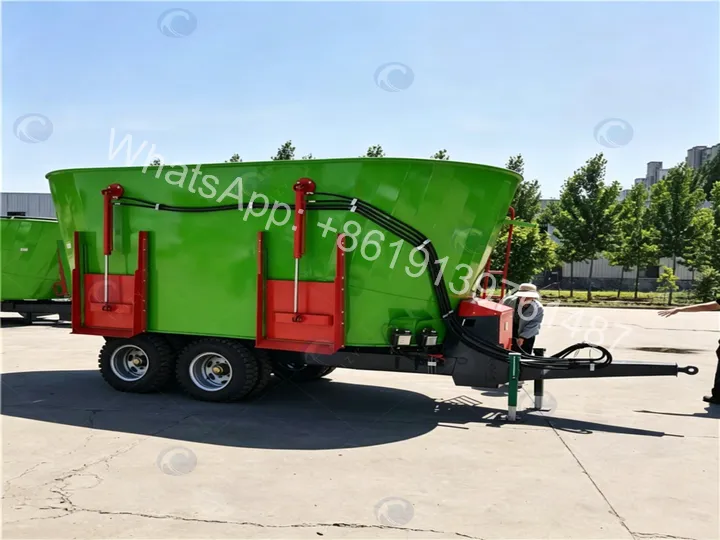
Vertical models are available in larger capacities, from small 3 m³ units up to 36 m³ machines for commercial feedlots.
How Do You Choose Between a Horizontal and Vertical TMR Feed Mixer?
Choose a Horizontal TMR Feed Mixer If:
- Your farm has 50–400 cows or a small beef herd
- You feed mostly silage, ground feed, and short forage
- You have a fixed feed room with limited height
- You want a lower-cost machine for a small operation
- You need a compact cattle feed mixer for daily batch mixing
Choose a Vertical TMR Feed Mixer If:
- Your farm has 200–2,000+ cows or a large feedlot
- You feed a lot of long straw, hay bales, or coarse forage
- You need high throughput and large batch capacity
- You want a stationary machine in a central feed kitchen
- You need a tractor-towed model for mobile feeding
What Power Options Are Available for Horizontal and Vertical TMR Feed Mixers?
Both horizontal and vertical TMR mixers are available with different power systems.
Electric motor drive is the most common for stationary machines. It is clean, quiet, and cheap to run where three-phase power is available.
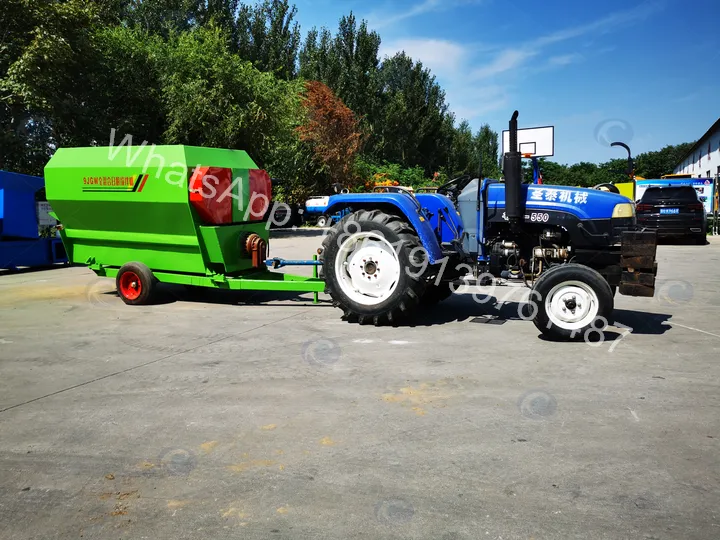
Tractor PTO drive is ideal for mobile operation or farms without reliable electricity. The machine is powered by the tractor’s power take-off shaft.
Dual-power models combine an electric motor and a PTO input. This gives you the flexibility to mix in the feed room with electric power and move to the field with tractor power.
When comparing machines, check whether the motor voltage and frequency match your local supply. Taizy can configure motors for 380V/50Hz, 400V/50Hz, or other regional standards.
How Do You Choose the Right TMR Feed Mixer Capacity?
Use your herd size and daily feeding frequency to estimate the right capacity.
| Herd Size | Suggested Capacity |
|---|---|
| 50–150 head | 2–5 m³ |
| 150–400 head | 5–9 m³ |
| 400–1,000 head | 9–18 m³ |
| 1,000+ head | 18–36 m³ |
Remember that silage and hay take up more volume per kilogram than concentrate. If your ration is high in roughage, choose a slightly larger capacity than the table suggests.
How Do the Costs and ROI of Horizontal and Vertical TMR Feed Mixers Compare?
A horizontal TMR feed mixer usually costs less upfront for small capacities. A vertical TMR feed mixer costs more but offers higher throughput and better handling of long fiber.
Consider the following when calculating return on investment:
- Labor savings: one machine can replace 20 or more workers
- Feed waste reduction: uniform TMR reduces sorting and leftovers
- Milk yield or weight gain: balanced nutrition supports production
- Fuel or electricity cost: electric models are cheaper to run than diesel
- Maintenance: direct-drive models have lower belt and pulley costs
Which TMR Feed Mixer Configuration Fits Your Farm and Production Needs?
There is no single “best” TMR feed mixer. The right choice depends on your herd size, feed ingredients, farm layout, and power supply.
For small to medium farms feeding mostly silage and ground feed, a horizontal TMR feed mixer is often the most practical and economical choice.
For large herds, long forage, or high-throughput operations, a vertical TMR feed mixer is usually the better investment.
Explore Taizy TMR Feed Mixers
Taizy manufactures both horizontal and vertical TMR feed mixers in a range of capacities and power configurations.
- View the Horizontal TMR Feed Mixer
- View the Vertical TMR Feed Mixer
Need help choosing? Contact Taizy today for a free consultation and detailed technical parameters for each model.