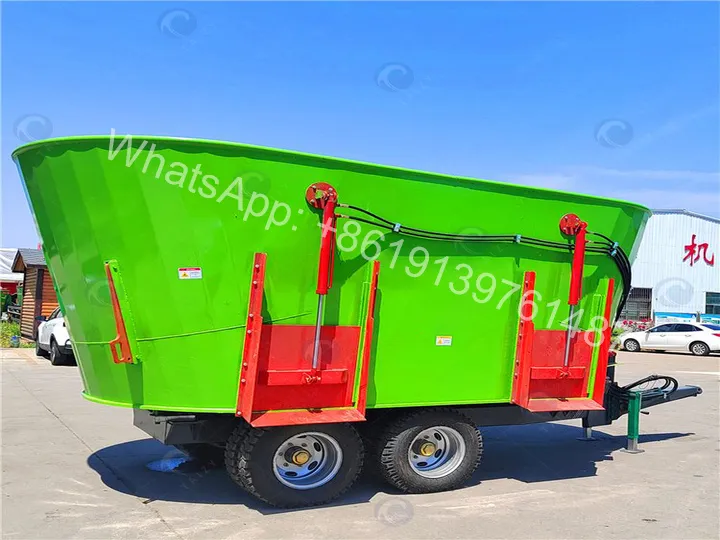
How Much Does a Vertical TMR Feed Mixer Cost?
If you are comparing quotes from different suppliers, here is the direct answer. A vertical TMR feed mixer typically costs between 3,000 and 25,000 USD. Small stationary models with a 3–5 m³ hopper sit at the lower end, while large 24–36 m³ machines with multiple augers and full weighing systems reach the higher end.
The price gap is not random. It reflects real differences in hopper capacity, steel thickness, blade material, power system, and factory support. This article explains what the machine does, what drives the cost, and how to judge whether a quote is fair. The goal is to help you spend your budget wisely, not simply buy the cheapest option.
What Does a Vertical TMR Feed Mixer Do on Your Farm?
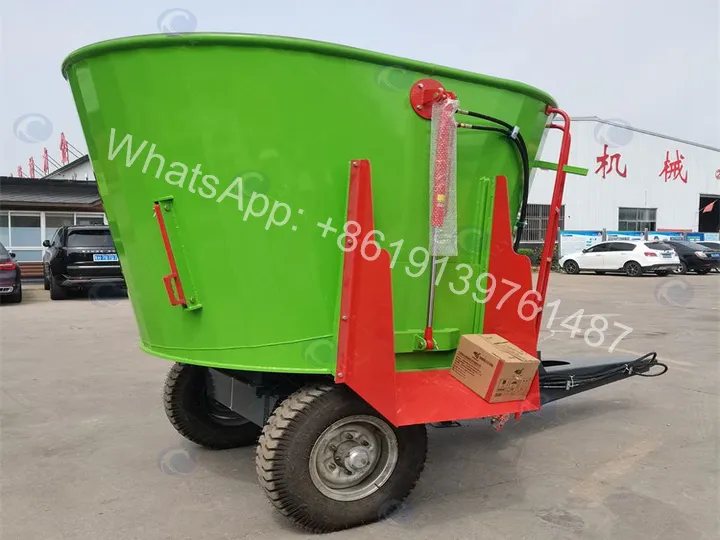
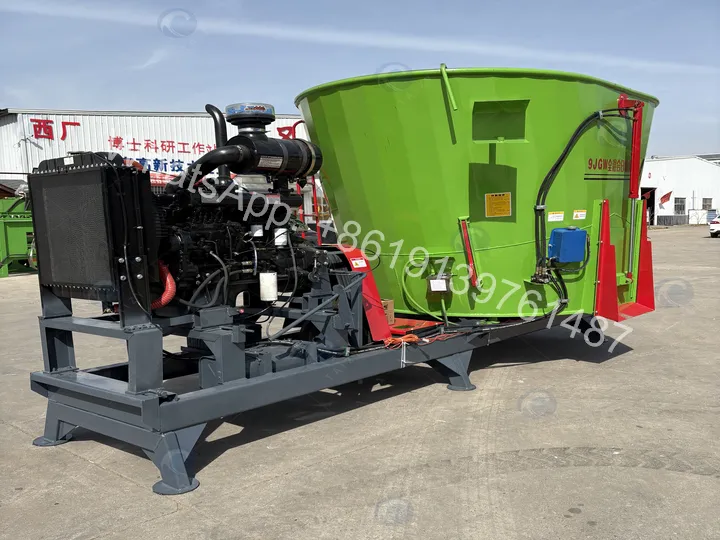
A vertical TMR feed mixer is a feed processing machine that chops, blends, and weighs roughage, concentrate, minerals, and additives into one uniform Total Mixed Ration. It is also called a TMR mixer, vertical feed mixer, or cattle feed mixer.
The machine uses one or more vertical augers inside a mixing tub. Hardened blades on the auger flights work against fixed knives to cut silage, hay bales, and straw into short pieces while blending them evenly with concentrates. A finished batch takes about 15–20 minutes. Depending on hopper size, one machine can feed 200 to 2,000 head of cattle per day and replace the manual work of more than 20 laborers.
What Factors Determine the Price of a Vertical TMR Feed Mixer?
1. Hopper Capacity
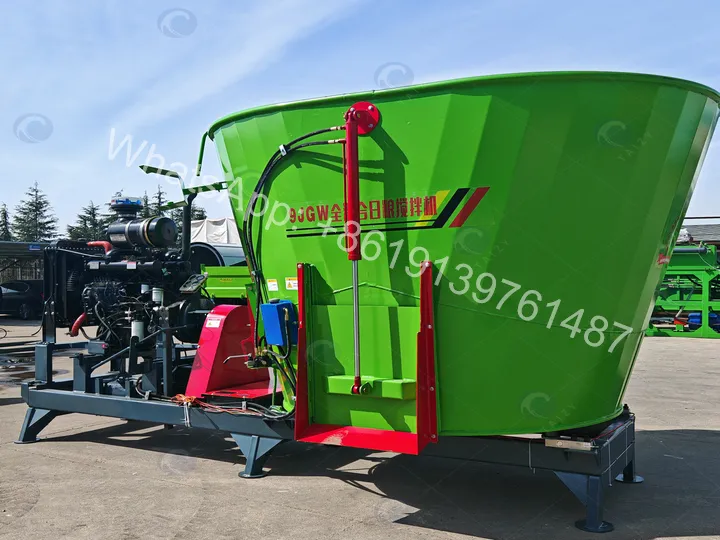
Capacity is the biggest price driver. A 5 m³ TMR mixer for a 200-cow dairy uses far less steel, a smaller motor, and a simpler gearbox than a 36 m³ unit for a commercial feedlot. As a rough guide, every step up in capacity adds proportionally to material and drive costs.
2. Steel Plate Thickness and Material
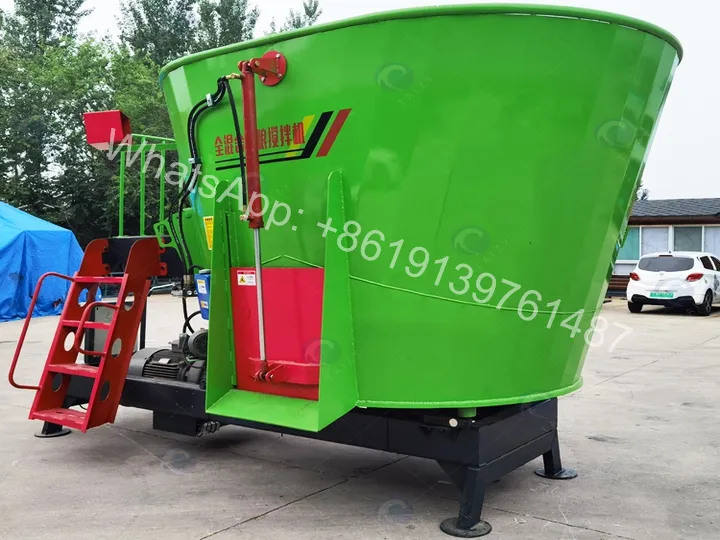
The mixing tub faces constant abrasion from silage and sand. Quality machines use Q345B steel with 6–10 mm tank plates and 14–25 mm bottom plates. Cheaper machines cut costs with thinner steel that wears through in one or two seasons. This difference alone can shift a quote by hundreds of dollars.
3. Blade Material
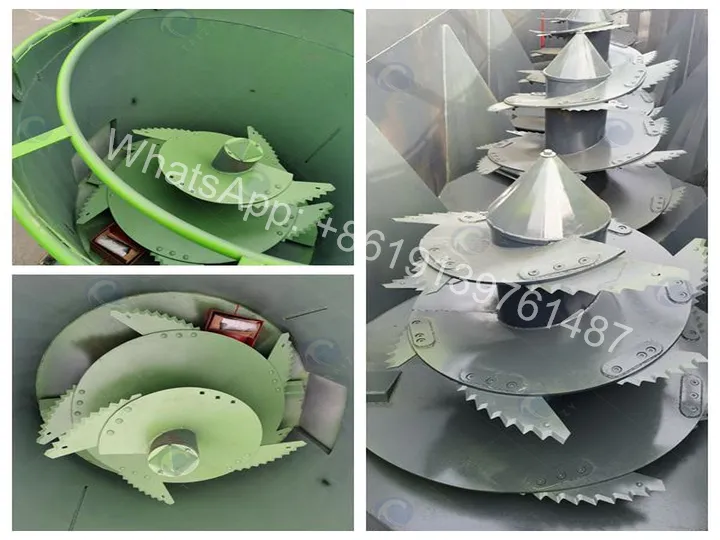
Standard blades dull quickly on straw-heavy rations. Hardened Cr12MoV alloy blades cost more upfront but stay sharp far longer and resist chipping. For farms mixing daily, quality blades pay for themselves within the first year.
4. Drive System
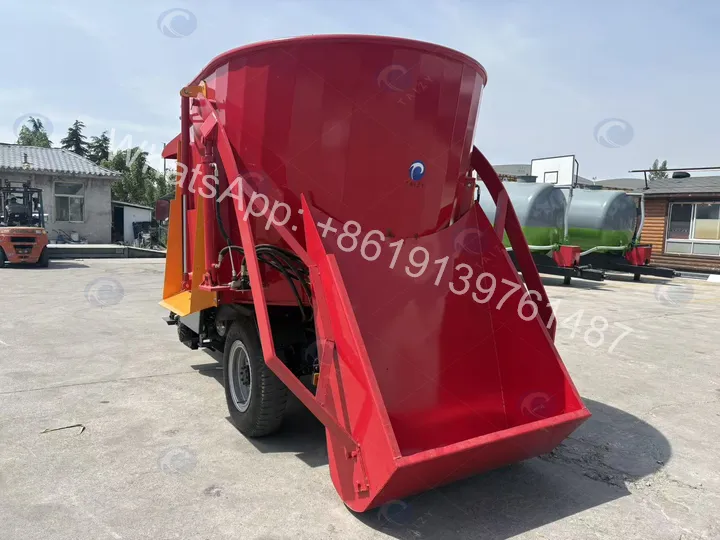
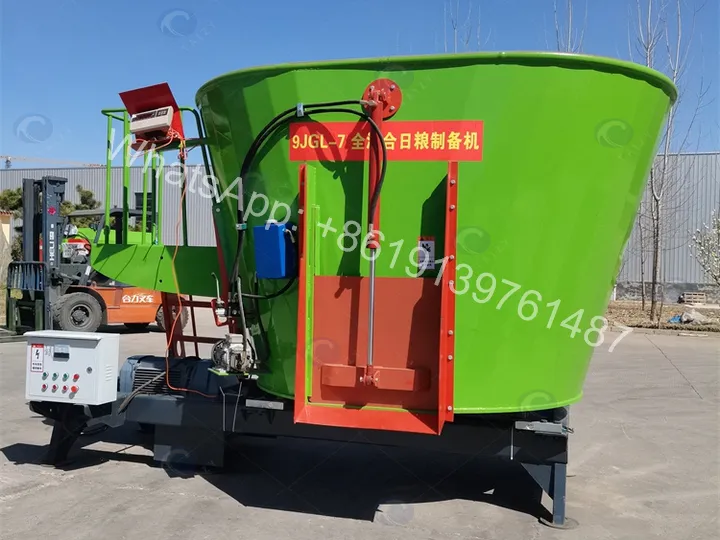
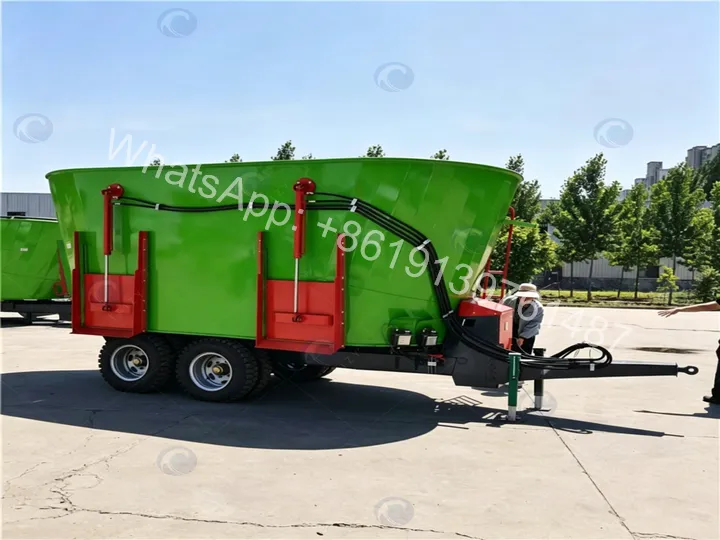
Electric motor drive is the most economical for farms with stable three-phase power. Tractor PTO drive suits mobile feeding and farms without reliable electricity. Larger machines may need dual or triple motors, which raises the price but delivers the torque required for heavy silage loads.
5. Weighing and Discharge Systems
A four-load-cell weighing system with digital display adds cost but delivers real value: accurate ration formulation and an overload alarm that protects the gearbox. Hydraulic discharge gates, magnetic plates for metal removal, and optional discharge conveyors also add to the final price.
6. Gearbox and Component Quality
The gearbox is the heart of a vertical feed mixer. A proven industrial gearbox brand costs more than a generic one, but it runs for years under daily heavy loads. Bearings, seals, and hydraulic components follow the same logic.
Why Can a Cheap TMR Mixer Cost More in the Long Run?
A low quote can hide thin steel, standard blades, a weak gearbox, or no weighing system. Each shortcut shows up later as cracked tub walls, constant blade changes, gearbox failure under load, or inaccurate rations that hurt milk yield.
Over three years of daily use, a cheap machine often costs more in repairs, spare parts, and lost feeding time than a well-built one. The smarter question is not “what is the lowest price” but “what is the cost per year of reliable operation.”
How to Judge Whether a Vertical TMR Mixer Quote Is Fair?
Use this checklist when comparing suppliers:
- Compare capacity and working capacity in kg/h, not just model names.
- Ask for steel plate thickness in the specification sheet, not just in photos.
- Confirm blade material by name, such as Cr12MoV.
- Check whether the weighing system is included or optional.
- Ask for the gearbox brand and motor rating.
- Confirm motor voltage and frequency match your local supply.
- Request a test-run video of the actual machine before payment.
A supplier who answers these questions clearly is usually one you can trust.
What After-Sales Support Should You Expect When Importing a Mixer?
When you import a TMR feed mixer from overseas, support matters as much as the machine itself. Before paying, confirm:
- One-year warranty on core components such as the gearbox, motor, and weighing system
- Fast spare parts supply for blades, belts, bearings, and seals
- English operation manual and electrical diagrams
- 24-hour technical response by message or video call
- Complete export documents for smooth customs clearance
Factories that build this support into their pricing charge slightly more, and that premium is worth it.
Where Can You Buy a Reliable Vertical TMR Feed Mixer?
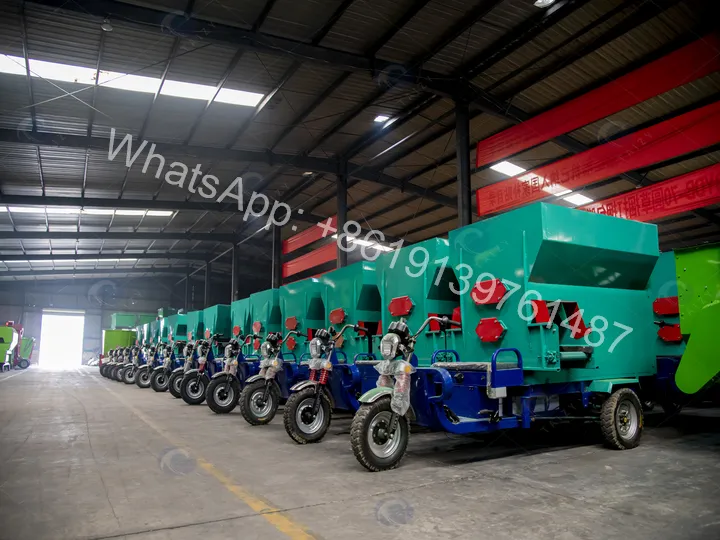
Taizy manufactures stationary and tractor-towed vertical TMR feed mixers from 3 m³ to 36 m³, with working capacities from 1,500 kg/h up to 10,000 kg/h. Every machine uses Q345B steel, Cr12MoV blades, and proven industrial gearboxes, with weighing systems fitted as standard.
Taizy offers factory-direct pricing, motor configurations matched to your local voltage, custom hopper sizes, and responsive export support for farms worldwide.
How to Get an Accurate Price Quote?
A vertical TMR feed mixer costs between 3,000 and 25,000 USD, and the difference is not branding. It is capacity, steel thickness, blade quality, drive system, and factory support. Buying the cheapest machine saves money today and often costs more tomorrow. Buying a well-built machine with reliable support gives you predictable feeding for years.
Tell Taizy your herd size, feed types, and power conditions, and you will receive a detailed quotation matched to your farm.